

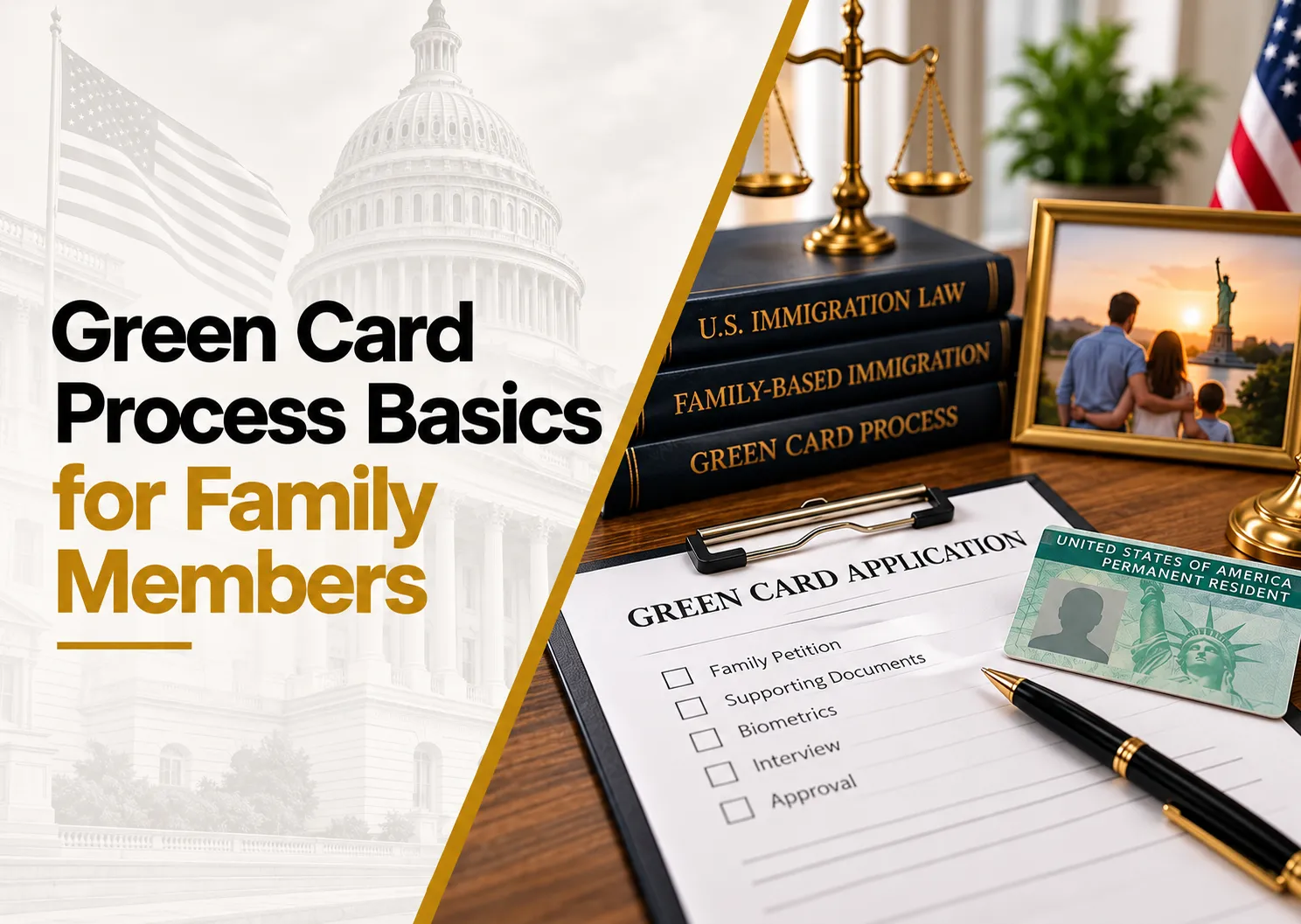
Most family-based green card cases involve at least three separate questions: (1) does the petitioner have a qualifying family relationship and a proper petition category; (2) is an immigrant visa immediately available or must the beneficiary wait in a preference category; and (3) what is the correct final process—adjustment of status in the United States, consular processing abroad, or, in some procedural postures, proceedings before an immigration judge? Approval of Form I-130 by itself does not grant permanent residence or lawful immigration status.
What Facts Change the Answer?
The analysis changes when any of these facts change. Identify them before treating a general rule as the answer.
- Who is the petitioner and beneficiary? U.S.-citizen spouse, parent, child, sibling, or lawful permanent resident relationships fall into different statutory categories.
- Is the beneficiary an immediate or preference-category relative? Immediate relatives of U.S. citizens are not subject to the same annual numerical limits; preference categories depend on priority date and Visa Bulletin availability.
- Where is the beneficiary and how did the person enter? Entry, admission/parole, unlawful presence, removal history, and current proceedings can change adjustment eligibility and which agency or tribunal has jurisdiction.
- Has anything changed while the case is pending? Naturalization of the petitioner, marriage, divorce, death, or a child turning 21 can change classification or require additional analysis.
- Are there admissibility or prior-filing issues? Criminal history, misrepresentation, prior removal, immigration violations, prior petitions, and unlawful presence can affect the next step.
- Could the beneficiary already be a citizen? For some children born abroad to U.S.-citizen parents, citizenship-at-birth or later automatic-acquisition rules should be screened before filing an immigrant petition.
Step One: Identify the Exact Family Category
Form I-130 establishes a qualifying family relationship for immigration purposes; it does not itself issue a green card. The first task is therefore to identify the relationship and the petitioner’s status accurately.
- Immediate relatives of U.S. citizens generally include spouses, unmarried children under 21, and parents of U.S. citizens who are at least 21.
- Family-preference categories include certain adult sons and daughters of U.S. citizens, siblings of adult U.S. citizens, and spouses and children of lawful permanent residents.
The distinction matters because immediate-relative visas are not subject to the same annual numerical limits as preference visas. Preference cases receive a priority date and generally must wait until the relevant category and country are current under the Department of State Visa Bulletin.
Step Two: Separate Petition Approval From Visa Availability
A petition can be approvable even when an immigrant visa is not yet available. USCIS’s August 1, 2025 family-based policy update emphasizes the separate stages of petition eligibility, filing, interviews, and decisions. USCIS also makes clear that approval of a family petition does not itself grant lawful permanent resident status, employment authorization, protection from removal, or immediate immigration.
For a preference-category beneficiary, the priority date and monthly Visa Bulletin therefore remain central. A filing strategy based on an old bulletin or a relative’s prior timeline can be wrong even when the relationship itself is straightforward.
Step Three: Determine the Correct Green Card Process
After the petition/category question, the case must be routed through the correct permanent-residence process. A beneficiary abroad generally proceeds through the National Visa Center and a U.S. embassy or consulate after petition approval and visa availability. A beneficiary in the United States may be able to file Form I-485 for adjustment of status when a visa is available and the person satisfies the applicable statutory and procedural requirements.
Concurrent filing of Forms I-130 and I-485 can be available in some immediate-relative and other visa-available situations, but physical presence in the United States does not by itself establish adjustment eligibility. Manner of entry, admission or parole, prior violations, removal proceedings, statutory exceptions, and admissibility all matter.
A Family Petition and the Proper Adjudicator Are Different Questions
The procedural posture can determine who has authority over an adjustment application. In Calderon Martinez v. Secretary, Department of Homeland Security, No. 24-10066 (11th Cir. Aug. 15, 2025) (unpublished), the applicants were in removal proceedings and were not “arriving aliens.” USCIS denied their adjustment applications because it lacked jurisdiction, and the Eleventh Circuit agreed that the immigration judge had exclusive jurisdiction under the applicable regulations.
That case does not mean everyone in removal proceedings is categorically barred from family-based adjustment. It illustrates a different point: an approvable family relationship, visa availability, adjustment eligibility, and the identity of the proper decision-maker are separate questions. Someone with immigration-court history should not assume the ordinary USCIS filing path applies.
Step Four: Build the Evidence for the Relationship and the Final Process
The evidence varies by relationship and procedural path. A spouse case may require proof of a bona fide marriage in addition to marriage and termination-of-prior-marriage records. A parent/child case can involve birth records, legitimation or custody issues, name changes, and evidence connecting records that use different spellings or dates.
The permanent-residence stage can also require identity documents, immigration records, medical-examination materials, police or court records where applicable, and evidence addressing a case-specific admissibility issue. Current form instructions—not an old checklist—should control the filing package.
Financial Sponsorship Is a Separate Requirement
Most family-based immigrants require Form I-864, Affidavit of Support, from the petitioner and sometimes a qualifying joint sponsor or household member. The affidavit is a legally significant sponsorship obligation, not simply evidence that the petitioner has a job. Household size, income, tax records, domicile, assets, and joint-sponsor rules should be analyzed under the current Form I-864 instructions and poverty-guideline materials.
Screen Citizenship Before Filing an I-130 for Some Children Born Abroad
A child born outside the United States to a U.S.-citizen parent may, depending on the law in effect on the child’s birth date and the parent’s citizenship and physical-presence history, already have acquired U.S. citizenship at birth. In other situations, a child may become a citizen automatically after birth when statutory requirements are met. That makes citizenship screening important before assuming an immigrant petition is the correct starting point.
The analysis can be date-specific and may depend on the parents’ marital status, paternity or legitimation rules, custody, the U.S.-citizen parent’s physical presence, and later immigration events. A one-size-fits-all “file an I-130 for the child” checklist can therefore point to the wrong process.
Common Issues That Can Change the Strategy
- The beneficiary entered without inspection, overstayed, worked without authorization, or has prior removal or immigration-court history.
- The petitioner naturalizes, the beneficiary marries or divorces, or a child turns 21 while the case is pending.
- There are prior arrests, convictions, immigration misrepresentations, unlawful presence, prior removal, or other possible inadmissibility issues.
- The petitioner cannot presently satisfy Form I-864 requirements or has a domicile issue.
- Civil documents contain inconsistent names, dates, parent information, or prior-marriage histories.
- A prior I-130, I-485, visa application, asylum filing, or immigration proceeding contains information that must be reconciled with the new filing.
- A child born abroad to a U.S.-citizen parent may have a citizenship claim that should be evaluated first.
What to Gather Before Filing
- Proof of the petitioner’s U.S. citizenship or lawful permanent residence.
- Civil documents establishing the claimed relationship, including marriage, birth, divorce, or death records as applicable.
- The beneficiary’s passport, visa, I-94, immigration documents, prior filings, notices, and any immigration-court paperwork.
- Address, employment, marriage, and travel history required by the applicable forms.
- Federal tax and income records relevant to Form I-864.
- Criminal-court dispositions, immigration notices, or prior application records that may affect eligibility or consistency.
- For a child born abroad to a U.S.-citizen parent, citizenship and physical-presence records needed to screen whether the child is already a citizen.
Frequently Asked Questions
No. An approved I-130 establishes the qualifying family relationship for immigration purposes. A separate immigrant-visa or adjustment process is generally required, and approval does not by itself confer lawful permanent residence or other immigration status.
Immediate-relative visas are not subject to the same annual numerical limits as family-preference categories, although the case still requires processing and the applicant must satisfy the requirements for the final immigration benefit.
No. Marriage to a U.S. citizen creates an immediate-relative relationship, but adjustment also depends on the person’s entry or parole, immigration history, applicable statutory rules and exceptions, admissibility, and procedural posture.
Not automatically. Jurisdiction can depend on whether the person is an arriving alien and on the immigration-court posture. The applicable regulations should be reviewed before choosing the filing forum.
There is no single reliable timeline. Petition processing, visa-category backlogs, the Visa Bulletin, National Visa Center processing, field-office or consular scheduling, requests for evidence, and case-specific issues all affect timing.
Yes. Depending on the facts and law in effect at birth, the child may already have acquired U.S. citizenship or may have a citizenship route that changes the appropriate filing strategy.
When Immigration Review May Be Useful
Botwin Law Firm assists Florida clients with family-based immigration, naturalization, and related immigration matters. Review can be particularly useful when there is removal history, an unusual entry, unlawful presence, prior filings, criminal history, document inconsistencies, a preference-category wait, sponsorship complications, or uncertainty about adjustment of status versus consular processing. Because immigration law is federal, the substantive eligibility rules do not change merely because the petitioner or beneficiary lives in Florida.
- #family-based immigration
- #green card
- #Form I-130
- #adjustment of status
- #consular processing
- #Form I-864
Reviewed by Paul Brytus, Esq.
This article is for general informational purposes only and does not constitute legal advice. Reading this article or contacting Botwin Law Firm does not create an attorney-client relationship. Please do not send confidential or sensitive information until an attorney-client relationship has been established. Every legal matter is fact-specific, and laws, procedures, forms, fees, and agency guidance can change. Prior results or general descriptions of legal processes do not guarantee or predict a similar outcome.